❤️

Verbs: present, PAST and future - passato prossimo (Play and Test)

Un proverbio dice: "se sei depresso è perché vivi nel passato, se sei ansioso è perché vivi nel futuro, se sei in pace con te stesso è perché vivi nel presente".

Come stai?

In che tempo vivi?

Ti deprime il passato prossimo dei verbi italiani?

A proverb says: "if you're depressed it's because you live in the past, if you're anxious it's because you live in the future, if you are at peace with yourself it's because you live in the present."

How do you feel?

In which time are you living?

Does the past tense of Italian verbs depress you?

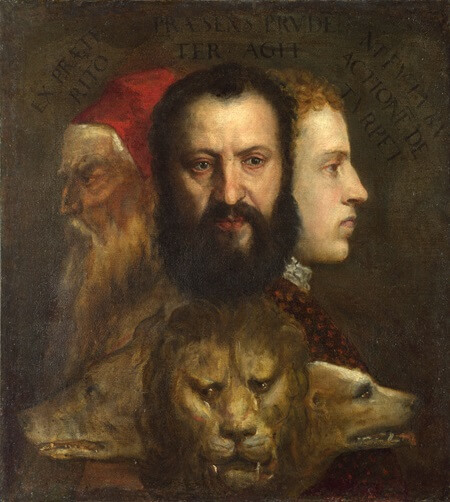
Le tre età dell'uomo, di Tiziano Vecellio

Allegoria del Tempo (1565-70 circa) di Tiziano
(clicca per ingrandimento)
Allegory of Time (1565-70 circa) by Tiziano

Verbs: present, PAST and future

Uno studente d'italiano principiante dovrebbe conoscere la coniugazione del presente dei verbi e del passato prossimo (il più comune tipo di passato).

In questo modo, anche a livello principiante, lo studente può descrivere e raccontare molte cose.

Spesso in italiano il futuro non si usa e al suo posto si preferisce il presente. Ad esempio: invece di dire "domani andrò al cinema" gli italiani dicono "domani vado al cinema".

In questa attività rivediamo l'uso del passato prossimo.

A beginning Italian language student should know the present tense conjugation of verbs and the "passato prossimo" (the most common type of past tense).

In this way, even at beginner level, a student can describe and talk about many things.

Oftentimes in Italian the future tense is not used, the present is preferred. For example: instead of saying "domani andrò al cinema" (tomorrow I'll go to the movies), Italians say "domani vado al cinema" (tomorrow I go to the movies).

In this activity we review the use of "passato prossimo".

Molti studenti hanno ancora problemi con il passato prossimo. Tu hai problemi? Non lasciarti deprimere!

Per formare il passato prossimo devi usare il verbo avere o essere con il participio passato del verbo.

Many students still have problems with the "passato prossimo".

To form the "passato prossimo", you have to use the verb "avere" (to have) or "essere" (to be) with the past participle of the verb.

L'ausiliare avere si usa con la maggior parte dei verbi (io ho mangiato, ho dormito, ho giocato...)

The auxiliary "avere" is used with most of the verbs: "io ho mangiato, ho dormito, ho giocato..."

L'ausiliare essere si usa con i verbi che esprimono movimento (io sono andato, sono venuto, sono uscito, sono partito, sono arrivato) e uno stato (sono stato, sono nato...), o con i verbi riflessivi (mi sono lavato...)

The auxiliary "essere" is used with verbs that express motion: "io sono andato, sono venuto, sono uscito, sono partito, sono arrivato..." a state of being: "sono stato, sono nato..." or with reflexive verbs: "mi sono lavato..."

Per esempio, per formare il passato prossimo di BALLARE usi il verbo avere e sostituisci la desinenza dell'infinito "ARE" con la desinenza del participio passato "ATO": Pinocchio HA ballATO. Io non HO ballATO.

For example, to form the "passato prossimo" of BALLARE (to dance) you use the verb "avere" and you substitute the infinitive "ARE" with "ATO", the ending of the Past Participle: "Pinocchio HA ball ATO . Io non HO ball ATO" (Pinocchio has danced. I have not danced.)

Per formare il passato prossimo di USCIRE verbo di "movimento") usiamo "essere" e cambiamo l'infinito "IRE" in "ITO": "Lui È uscITO. Io non SONO uscITO".

To form the "passato prossimo" of USCIRE (to go out - verb of "mouvement") we use "essere" and change the infinitive "IRE" with "ITO": "Lui È uscITO. Io non SONO uscITO".

Tu sei uscito ieri? Hai ballato?

"Tu sei uscito ieri? Hai ballato?" (Did you go out yesterday? Have you danced?)

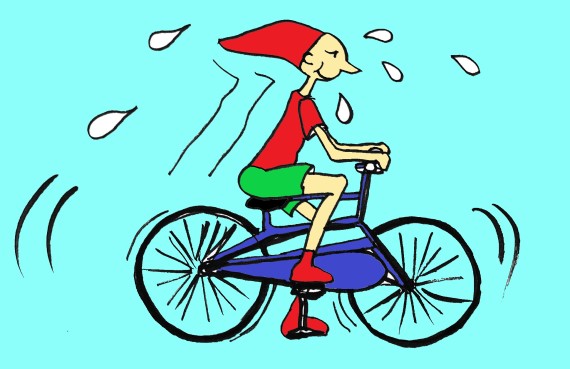
Pinocchio in bicicletta

Con un po' di sforzo in più, approfondisci l'argomento:

Passato prossimo Participio passato

Ora pratica il tempo passato con alcuni esercizi.

Now let's practice the past tense with some exercises.

Esercizio 1 - anagrammi

In che tempo vivi? Nel passato, nel presente o nel futuro? Riordina le " parole del tempo "!

Scrivi sul tuo quaderno di italiano e anagramma le parole seguenti:

(Esempio: rao - Soluzione: ora)

1. sposata

2. irie

3. nona cossor

4. tofuru

5. modani

6. pododomina

7. nano pmorossi

8. sentepre

9. gigo

10. soseda

Il passato ha il suo fascino. Ma, se pensiamo sempre a ieri, all'anno scorso e al passato (con nostalgia o rimpianto), dimentichiamo il presente.

Tempo passato

Il futuro porta possibilità nuove. Ma, se pensiamo sempre a domani, a dopodomani, all'anno prossimo e al futuro (con speranza o paura), dimentichiamo il presente.

tempo futuro

Il presente porta il presente. A volte porta cose belle (e dobbiamo vivere la felicità), a volte porta problemi (e dobbiamo cercare soluzioni). Nel presente - oggi, adesso - in equilibrio fra cose belle e soluzioni possibili, costruiamo la nostra vita.

tempo presente

Esercizio 2

Trasforma i verbi in parentesi dall'infinito al participio passato.

Usa il dizionario online se necessario.

  1. ____________ (from the infinitive: cantARE)
  2. ____________ (from the infinitive: viaggiARE)
  3. ____________ (from the infinitive: dormIRE)
  4. ____________ (from the infinitive: tenERE)
  5. ____________ (from the infinitive: parlARE)
  6. ____________ (from the infinitive: mangiARE)
  7. ____________ (from the infinitive: piacERE)
  8. ____________ (from the infinitive: leggERE)
  9. ____________ (from the infinitive: nuotARE)
  10. ____________ (from the infinitive: studiARE)
  11. ____________ (from the infinitive: andARE)
  12. ____________ (from the infinitive: venIRE)
  13. ____________ (from the infinitive: partIRE)
  14. ____________ (from the infinitive: uscIRE)
  15. ____________ (from the infinitive: pagARE)
  16. ____________ (from the infinitive: telefonARE)
  17. ____________ (from the infinitive: potERE)
  18. ____________ (from the infinitive: dovERE)
  19. ____________ (from the infinitive: volERE)
  20. ____________ (from the infinitive: conoscERE)

Esercizio 3

Coniuga i verbi in parentesi al passato prossimo.

Usa il dizionario online se necessario.

  1. Io ieri ____________ al ristorante. (from the infinitive: andARE)
  2. Tu ____________ in pubblico? (from the infinitive: parlARE)
  3. Lei ____________ molto. (from the infinitive: dormIRE)
  4. Tu ____________ molto? (from the infinitive: lavorARE)
  5. Lui ____________ la pizza. (from the infinitive: mangiARE)
  6. Voi ____________ coca cola!(from the infinitive: bERE)
  7. Noi ____________ molti libri. (from the infinitive: leggERE)
  8. Tu ____________ molti libri? (from the infinitive: comprARE)
  9. Tu ____________ ieri? (from the infinitive: nuotARE)
  10. Loro ____________ al ristorante tutti i giorni. (from the infinitive: andARE)
  11. Lei ____________ al cinema. (from the infinitive: andARE)
  12. Tu ____________ l'ultimo film di Benigni? (from the infinitive: vedERE)
  13. Voi ____________ al cinema? (from the infinitive: venIRE)
  14. Io ____________ tutte le sere. (from the infinitive: uscIRE)
  15. Lui ____________ già in vacanza? (from the infinitive: partIRE)
  16. Anche loro ____________ stasera!(from the infinitive: uscIRE)
  17. Noi non ____________ uscire. (from the infinitive: potERE)
  18. Mie cugine ____________ in montagna questa estate. (from the infinitive: andARE)
  19. Tu ____________ un gelato? (from the infinitive: prendERE)
  20. Loro ____________ mangiare il gelato tutti i giorni. (from the infinitive: volERE)

When you're ready...

Check out the

Answers

Pronuncia

Ascolta la parola/frase, clicca sul microfono per registrarti e cerca di raggiungere il punteggio più alto!