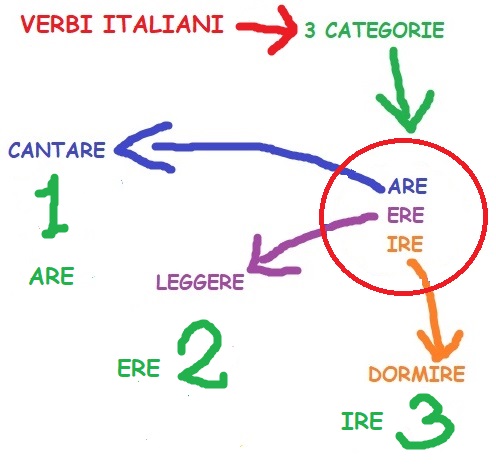
La situazione ideale per studiare l'italiano è "giocare" seguendo 3 passi:
1. usare colori e immagini
2. ascoltare suoni
3. creare storie ed emozioni per ancorare parole, suoni e concetti alla nostra memoria e conoscenza.
Prova subito! Ad esempio, vuoi imparare tre parole nuove: cantare, leggere e dormire.
1. Nel tuo quaderno di italiano (sì, DEVI AVERE il tuo quaderno di italiano!) scrivi ogni parola con un colore diverso e aggiungi un tuo disegno o un bozzetto (anche molto semplice) ad ogni parola per ricordarti il significato.
2. Ascolta l'audio di ogni parola.
3. Àncora ogni parola e il suono ad una storiella con un'emozione (usa la tua lingua madre per creare la storia). Ad esempio (usando l'inglese), puoi dividere la parola "cantare" in "can" e "tar(e)" e immaginare uno studente che nella mensa scolastica - CAN(teen) - inizia a cantare per distrarsi perché è a dieta e non vuole mangiare la torta al limone - TAR(t).
Dividi il verbo "leggere" in "leg" e "ger(e)" e immagina uno studente che viaggia a piedi - on his LEG(s) - in GERmania e data la sua stanchezza non può rilassarsi e leggere.
Dividi il verbo "dormire" in "dorm" e "ire" e immagina uno studente che va nel suo dormitorio - DORM - e scopre una situazione inquietante - EERie - per cui non riesce a dormire.
Non esitare a riempire la tua casa di bigliettini con scritte, disegni e storielline per ricordare parole e frasi italiane! |
The ideal way to study Italian is to “play” by following 3 simple steps:
1. use colors and images
2. listen to sounds
3. create stories and emotions to anchor words, sounds, and concepts in your memory and understanding.
Try it now! For example, let’s say you want to learn three new words: "cantare" (to sing), "leggere" (to read) and "dormire" (to sleep).
1. In your Italian notebook (yes, you MUST HAVE your Italian notebook!) write each word in a different color and add a sketch or little drawing (even something very simple) to help you remember what it means.
2. Listen to the audio for each word.
3. Anchor each word and its sound to a short story with an emotion (you can create the story in your own native language). For example (using English), you might break the word "cantare" into "can" and "tar(e)" and imagine a student in the school CANteen who starts singing (cantare) to distract themselves because they’re on a diet and trying to avoid the lemon TARt.
Take "leggere" and break it into “leg” and “ger(e).” Picture a student traveling on foot - on his LEGs - in GERmany, and he’s too tired to relax and read.
For "dormire", break it into “dorm” and “ire.” Imagine a student going into the DORMitory and finding an EERIE situation that makes it hard to sleep.
Don’t hesitate to fill your home with sticky notes, drawings, and little stories to help you remember Italian words and phrases! |