

Il Bocconcino Culturale è un esercizio
di ascolto e comprensione.
Nel testo seguente ci sono delle parole mancanti, ma... ...NON SPAVENTARTI!
:-)
Ascolta l'audio mentre leggi il testo (ascoltalo più volte). Su un foglio di carta, scrivi le parole italiane mancanti.

"Salus per aquam" in latino significa "salute per mezzo dell'acqua". Da qui è derivato il termine ._._._._._._._._._._._._. SPA per indicare una stazione ._._._._._._._.. Gli antichi romani amavano molto le terme per fare sport, lavarsi, ricevere massaggi e fare vita sociale. Siccome non avevano l'acqua corrente in casa, molti andavano alle terme tutti i giorni per lavarsi. Alcuni anche più volte al giorno. Il massaggio con gli olii era considerato importante non solo per ragioni ._._._._._._._._._. e di benessere ma anche perché si pensava che prevenisse i raffreddori. La socializzazione negli spazi pubblici era veramente un elemento importante. Molti erano i dibattiti e gli scandali suscitati dalla presenza di donne e uomini negli stessi locali delle terme. Alcuni imperatori avevano cercato di porre regole e restrizioni agli orari femminili e maschili nelle terme, ma molto spesso queste norme non erano osservate. Le donne in alcuni momenti dell'epoca romana hanno avuto grande libertà e potevano scegliere come comportarsi (tradizionalmente/pudicamente o ._._._._._._._._._._._._._._._._.). |
"Salus per aquam" in Latin means "health by means of water". Hence the **** term SPA to indicate a **** bath. The ancient Romans were very fond of spas for practicing sports, washing, receiving massages and socializing. Since they did not have running water at home, many went to the spa every day to wash. Some even several times a day. Oil massage was considered important not only for **** and wellness reasons but also because it was thought to prevent colds. Socialization in public spaces was really an important element. There were many debates and scandals arousing by the presence of women and men in the same rooms of the spas. Some emperors tried to enforce rules and restrictions on female and male hours in the baths, but very often those rules were not observed. In some periods of the Roman era, women had great freedom and could choose how to behave (traditionally/modestly or ****). |
|---|
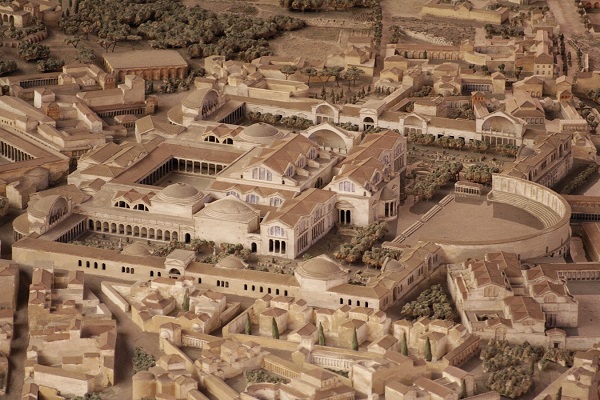
Ricostruzione di Gismondi delle Terme di Traiano
(Roma. Immagine tratta da Wikipedia)
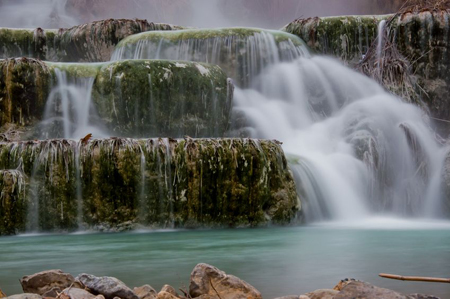
Terme romane all'aperto
(Saturnia)
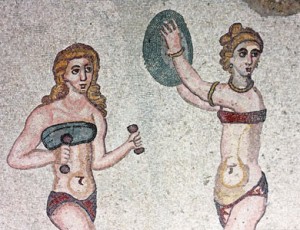
Mosaico romano. Donne alle terme.
(Villa romana del Casale Piazza Armerina, Sicilia)
Notiamo l'uso dei pesi e di altri attrezzi per fare sport.
Gli italiani in generale hanno perso l'abitudine all'uso delle terme e al culto del corpo e dello sport che era tipico dei romani. Tuttavia, in Italia ci sono molte stazioni termali e in alcune zone ci sono delle terme libere ( ._._._._._. di acqua calda ._._._._._._._._. che naturalmente sgorga dal terreno in aperta campagna) che molte persone utilizzano per i bagni. Il culto dell'acqua per gli italiani è principalmente legato all'estate, in cui il mare è la meta principale di vacanze. Le zone termali e la spiaggia sono situazioni di relax che diventano facilmente occasioni per ._._._._._._._._._._._._.. È chiaro in tal modo che il concetto di salute non è legato solo all'assenza della malattia ma anche al benessere in generale, alle relazioni e alla felicità. Com'è la situazione nel tuo paese? Ci sono delle stazioni termali? Si va a fare i bagni al mare o al lago o al fiume? Tu vai alle terme? Ti senti bene? Sei felice? |
Italians in general have lost the habit of using spas and having the cult of the body and sport that was typical of the Romans. However, in Italy there are many spas and in some areas there are free spas (**** of **** hot water that naturally flows from the ground in the open countryside) that many people use for bathing. The cult of water for Italians is mainly linked to summer, in which the sea is the main holiday destination. The thermal areas and the beach are relaxing situations that easily become occasions for ****. It is thus clear that the concept of health is not only linked to the absence of disease but also to wellness in general, relationships and happiness. How is the situation in your country? Are there any spas? Do you go swimming in the sea or the lake or the river? Do you go to the spas? Do you feel well? Are you happy? |
|---|
Clicca su Pinocchio-Risposta:


Intermediate Lesson 18
Lesson Tools:
References:
Navigation: