

Il Bocconcino Culturale è un esercizio
di ascolto e comprensione.
Nel testo seguente ci sono delle parole mancanti, ma... ...NON SPAVENTARTI!
:-)
Ascolta l'audio mentre leggi il testo (ascoltalo più volte). Su un foglio di carta, scrivi le parole italiane mancanti.

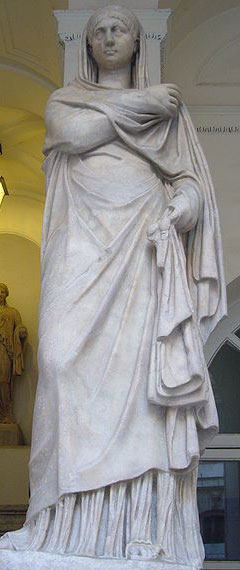
La religione romana era un insieme di ._._._._._._._._., pratiche e culti legati alla sfera civile, familiare e ._._._._._._._._._._._._._.. Era caratterizzata dal politeismo e da un'estrema tolleranza nei confronti di altre religioni. Impiantata su un sistema di culti indigeni e mediterranei, la religione romana importava le divinità dei popoli che Roma conquistava (soprattutto Etruschi e Greci). Le vestali erano fra le sacerdotesse più importanti dell'antica Roma e godevano di un enorme prestigio. Dedicate alla dea Vesta, custodivano il fuoco sacro (culto ._._._._._._._. e primordiale). Il fuoco non doveva mai spegnersi, pena la morte. Erano giovani fanciulle provenienti dalle famiglie nobili che durante il periodo del sacerdozio (circa 30 anni) non potevano avere rapporti sessuali, pena la morte. La condanna a morte di una vestale, poiché la giovane era considerata sacra e nessuno poteva ucciderla, avveniva per sepoltura da viva. Tra le pratiche religiose più importanti c'era l'interpretazione dei segni e dei presagi con cui i sacerdoti esprimevano la volontà divina. Le divinazioni più comuni riguardavano il volo degli uccelli, la lettura delle ._._._._._._._. degli animali, gli eventi straordinari (terremoti, eruzioni, epidemie, eclissi). |
The Roman religion was a set of **** , practices and cults related to the civil, family and **** sphere. It was characterized by polytheism and extreme tolerance towards other religions. Implanted on a system of indigenous and Mediterranean cults, the Roman religion imported the divinities of the peoples that Rome conquered (especially the Etruscans and Greeks). Vestals were among the most important priestesses of ancient Rome and enjoyed enormous prestige. Dedicated to the goddess Vesta, they guarded the sacred fire (**** and primordial cult). The fire must never go out, on pain of death. Vestals were young girls from noble families who during the period of the priesthood (about 30 years) could not have sexual relations, under penalty of death. The death sentence of a vestal, since the young woman was considered sacred and no one could kill her, took place by burial while alive. Among the most important religious practices was the interpretation of the signs and omens with which the priests expressed the divine will. The most common divinations concerned the flight of birds, the reading of the **** of animals, extraordinary events (earthquakes, eruptions, epidemics, eclipses). |
|---|

Gli imperatori romani nel IV e V secolo d. C. avevano ._._._._._._._._._._._. il cristianesimo e proibito gli altri culti. Il sacro fuoco di Vesta era stato spento. Il cristianesimo, divenuto poi in Italia "religione Cattolica Apostolica Romana", era stato indissolubilmente legato al potere fino a quando, nel 1871 con la Legge delle Guarentigie ed in seguito nel 1929 con i Patti ._._._._._._._._._._._. il governo italiano aveva sancito la divisione fra lo Stato e la Chiesa (libera Chiesa in libero Stato). La religione più diffusa dell'Italia odierna è il cattolicesimo, con una serie di altre religioni (ebraismo, buddismo, islamismo, ecc...) seguite da altri gruppi della popolazione. Attraverso i secoli e in alcune situazioni, la storia del papato e del Vaticano ci ha dato un'immagine del cristianesimo e cattolicesimo come di una religione ._._._._._._._._._._._._. al potere, alle istituzioni, al possesso di beni temporali. Bisogna però dire che secoli di religione cristiana e cattolica hanno creato nel substrato culturale italiano un diffuso senso del ._._._._._._._., umanesimo e rispetto dell'altro come essere umano. Com'è la situazione nel tuo paese? Qual è la religione principale? Secondo te ha creato dei segni distintivi particolari nel substrato culturale del tuo paese? |
The Roman emperors in the 4th and 5th centuries AD. **** Christianity and prohibited other cults. The sacred fire of Vesta got extinguished. In Italy, Christian religion, which later became the "Roman Catholic Apostolic Religion", had been inextricably linked to power until, in 1871 with the Law of Guarantees and later in 1929 with the **** Pacts, the Italian government sanctioned the division between the State and the Church (free Church in a free state). The most widespread religion in Italy today is Catholicism, with a number of other religions (Judaism, Buddhism, Islam, etc ...) followed by other groups of the population. Over the centuries and in some situations, the history of the papacy and the Vatican has given us an image of Christianity and Catholicism as a religion **** to power, to institutions, to the possession of temporal goods. However, it must be said that centuries of Christian and Catholic religion have created in the Italian cultural substratum a widespread sense of ****, humanism and respect for the other as a human being. How is the situation in your country? What is the main religion? In your opinion, has it created particular distinctive signs in the cultural substratum of your country? |
|---|
Clicca su Pinocchio-Risposta:


Intermediate Lesson 20
Lesson Tools:
References:
Navigation: