Uso basico del verbo Piacere (Basic use of the verb Piacere – to like)

Per molti studenti il verbo “piacere” non è un piacere, perché ha una costruzione particolare e bisogna studiarlo.
Ti piace il verbo piacere?
Ti piacciono i verbi?
Cosa ti piace?

For many students the verb “piacere” (= to like) is not a pleasure, because it has a particular construction and needs to be studied.
Do you like the verb “piacere”?
Do you like studying verbs?
What do you like?

To practice Italian this week we invite you to read and test…
PRACTICE HERE: Italian/English Version

Para practicar el idioma italiano esta semana te invitamos a leer y testar…
PRACTICA AQUÍ: Versión Italiano/Española

Una parte dell’Universo – partitivi (A part of the Universe – partitives)

Alcune discipline scientifiche e spirituali ci ricordano che noi siamo parte dell’Universo e l’Universo è parte di noi.
Cosa ne pensi tu?
Senti che c’è un po’ di Universo dentro di te?
Sai usare i partitivi in italiano?

Some scientific and spiritual disciplines remind us that we are part of the Universe, and that the Universe is part of us.
What do you think about that?
Do you feel that there’s a bit of the Universe inside you?
Do you know how to use partitives in Italian?

To practice Italian this week we invite you to read and test…
PRACTICE HERE: Italian/English Version

Para practicar el idioma italiano esta semana te invitamos a leer y testar…
PRACTICA AQUÍ: Versión Italiano/Española

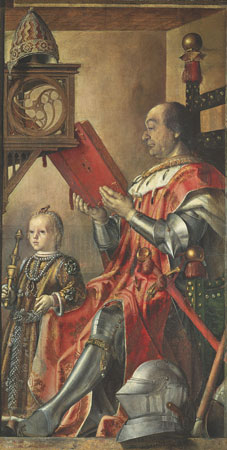
Il guerriero – pronomi (The warrior – pronouns)

Ritratto del Duca di Montefeltro, famoso guerriero, con il figlio.
Di Pietro di Spagna, circa 1476

Ad ogni bambino piacerebbe avere vicino un guerriero o un supereroe che lo protegge. Piacerebbe anche a molti adulti!
Ti piacerebbe avere un guerriero vicino? Ti piacerebbe essere un supereroe?
Stai combattendo con i pronomi italiani?

Every child would like to have a warrior or superhero who protects them. Many adults would like it too!
Would you like to have a warrior near you? Would you like to be a superhero?
Are you battling Italian pronouns?

To practice Italian this week we invite you to sing and test…
PRACTICE HERE: Italian/English Version

Para practicar el idioma italiano esta semana te invitamos a cantar y testar…
PRACTICA AQUÍ: Versión Italiano/Española

Buon Anno Nuovo! I miei progetti (Happy New Year! My plans)

Ogni Nuovo Anno è un momento di rinnovamento, in cui possiamo fare una pausa, esaminare la nostra vita, apprezzare ciò che abbiamo, lasciarci alle spalle ciò che non funziona e nutrire ciò che funziona, fare progetti e ricominciare da capo.

Every New Year is a time for renewal – a moment when we can pause, look at our lives, appreciate what we have, let go of what isn’t working, nurture what is, make plans, and start again.

To practice Italian this week we invite you to write…
PRACTICE HERE: Italian/English Version

Para practicar el idioma italiano esta semana te invitamos a escribir…
PRACTICA AQUÍ: Versión Italiano/Española

Tartufi di cioccolato da regalare (Chocolate truffles to give as gifts)

Tempo di feste, tempo di regali

Nel periodo delle feste, in molte culture è tradizione scambiarsi dei doni.
A volte è difficile pensare ad un regalo da fare.
Hai mai provato a regalare dei dolcetti preparati da te?

In the holiday season, exchanging gifts is a tradition in many cultures.
Sometimes it’s hard to think of what to give.
Have you ever tried giving homemade treats as a gift?

To practice Italian this week we invite you to read and cook…
PRACTICE HERE: Italian/English Version

Para practicar el idioma italiano esta semana te invitamos a leer y cocinar…
PRACTICA AQUÍ: Versión Italiano/Española

Immagine Jonathan Borba di Pexels

La festa di Santa Lucia (The feast of Saint Lucy) di LindaAnn Loschiavo

Santa Lucia
Palma il Giovane (1544-1628)

“Sei la luce dei miei occhi” è un’espressione idiomatica italiana per dire che qualcosa o qualcuno è molto prezioso.
In Italia, Santa Lucia è una delle sante più amate, invocata per proteggere gli occhi e la vista, data l’etimologia latina del suo nome: Lux = Luce.
Santa Lucia viene celebrata il giorno del 13 dicembre e per la sua festa si cucinano dolci e una buonissima zuppa.
Hai mai assaggiato i dolci di Santa Lucia?

“Sei la luce dei miei occhi” (= you are the light of my eyes) is an Italian idiom to say that something or someone is very precious.
In Italy, Saint Lucy is one of the most beloved saints, invoked to protect the eyes and sight, given the Latin etymology of her name: Lux = Light.
Saint Lucia is celebrated on December 13th and – for her celebration – sweets and a delicious soup are cooked.
Have you ever tasted the sweets of Saint Lucy?

To practice Italian this week we invite you to read and cook…
PRACTICE HERE: Italian/English Version

Para practicar el idioma italiano esta semana te invitamos a leer y cocinar…
PRACTICA AQUÍ: Versión Italiano/Española

Canta in italiano: Infinite volte – e più (Sing in Italian: Infinite times – and more)


A volte vogliamo di più, a volte non vogliamo più.
Come si usa “più” in italiano?
Vuoi più informazioni?

Sometimes we want more, sometimes we don’t want anymore.
How do we use “more” in Italian?
Want more info?

To practice Italian this week we invite you to sing and test…
PRACTICE HERE: Italian/English Version

Para practicar el idioma italiano esta semana te invitamos a cantar y probar…
PRACTICA AQUÍ: Versión Italiano/Española

Picture source 123rf.com

Amore e Psiche ed espressioni idiomatiche (Idiomatic expressions)

Psyche and Cupid,
by Antonio Canova

Alcuni dicono che il mito di Amore e Psiche rappresenti il fatto che non si dovrebbe analizzare troppo l’amore.
Cosa pensi tu? L’amore deve essere istintivo o va anche analizzato, capito e razionalizzato?

Some people say that the myth of Cupid and Psyche represents the fact that one should not analyze love too much.
What do you think? Should love be instinctive or should it be analyzed, understood and rationalized?

To practice Italian this week we invite you to read and test…
PRACTICE HERE: Italian/English Version

Para practicar el idioma italiano esta semana te invitamos a leer y testar…
PRACTICA AQUÍ: Versión Italiano/Española

Image courtesy 123rf

Giocare: indovina la parola (Playing: guess the word)

Giocare è divertente e rilassante ma alcuni giochi richiedono impegno e concentrazione.
Un proverbio dice: “quando il gioco si fa duro solo i duri giocano”.
Ti piace fare giochi impegnativi?

Playing is fun and relaxing, but some games require effort and concentration.
As the saying goes, “quando il gioco si fa duro solo i duri giocano” (When the going gets tough, the tough get going.)
Do you enjoy challenging games?

To practice Italian this week we invite you to play…
PRACTICE HERE: Italian/English Version

Para practicar el idioma italiano esta semana te invitamos a jugar…
PRACTICA AQUÍ: Versión Italiano/Española

Risotto ai mirtilli: il buono e il bello

Risotto ai mirtilli con decorazione di fiori

Chi ama cucinare cura la scelta degli ingredienti, seleziona i più adatti e li rispetta per le loro peculiarità.
E, dopo aver cucinato, non può resistere a guarnire e abbellire un piatto, non solo per gli ospiti o i familiari che lo gusteranno, ma anche per il proprio piacere.
Ti piace mangiare qualcosa che sia tanto buono quanto bello?

Those who love to cook take great care in the choice of ingredients, select the most suitable ones and respect them for their peculiarities.
And, after cooking, they cannot resist garnishing and embellishing a dish, not only for the guests or family members who will enjoy it, but also for their own pleasure.
Do you like to eat something that is as good as it is beautiful?


To practice Italian this week we invite you to read and cook…
PRACTICE HERE: Italian/English Version

Para practicar el idioma italiano esta semana te invitamos a leer y cocinar…
PRACTICA AQUÍ: Versión Italiano/Española