Ricette di Halloween (Halloween recipes)

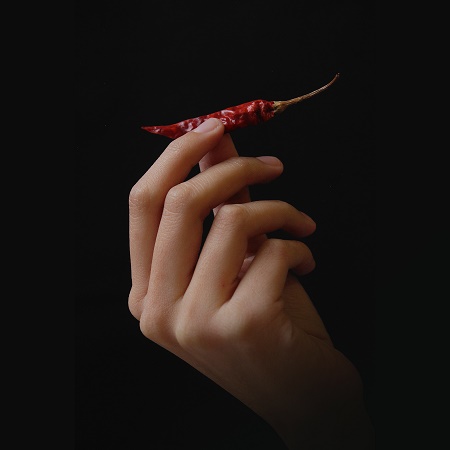
Quanto può essere spaventoso un peperoncino? A chi piace celebrare Halloween e cerca ricette “spaventose”, consigliamo la lettura seguente.
Ti piace spaventarti?

How scary can a chili pepper be?
For those who like to celebrate Halloween and are looking for “scary” recipes, we recommend the following reading.
Do you like to get scared?

To practice Italian this week we invite you to read and cook…
PRACTICE HERE: Italian/English Version

Para practicar el idioma italiano esta semana te invitamos a leer y cocinar…
PRACTICA AQUÍ: Versión Italiano/Española

Picture courtesy of Miguel Andrade

Un tango italiano (An Italian tango)

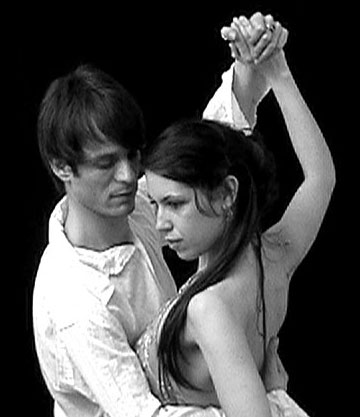
Samantha Di Paolo, ballerina italiana e insegnante di tango.

Il tango è un ballo argentino che negli ultimi anni è diventato molto di moda in Italia. Il cantautore Gianmaria Testa ci propone un tango italiano, molto caldo e avvolgente da ballare piano, abbracciati.
Ti piace ballare?

Tango is an Argentinian dance that in recent years has become very fashionable in Italy. Singer Gianmaria Testa offers us an Italian tango, very warm and inviting, to be danced slowly in a hug.
Do you like dancing?

To practice Italian this week we invite you to sing…
PRACTICE HERE: Italian/English Version

Para practicar el idioma italiano esta semana te invitamos a cantar…
PRACTICA AQUÍ: Versión Italiano/Española

(Photo courtesy Samantha Di Paolo archive)

Hai migliorato il tuo italiano? – Have you improved your Italian? (passato prossimo)

Non hai fatto niente per migliorare il tuo italiano!?
(You haven’t done anything to improve your Italian!?)

Molti studenti hanno ancora problemi con il passato prossimo.
Tu hai problemi? Non lasciarti deprimere e completa l’esercizio seguente.
Cosa hai fatto recentemente per migliorare il tuo italiano?

Many students still have problems with the “passato prossimo”.
Do you have problems? Don’t be depressed and complete the following exercise.
What have you done recently to improve your Italian?

To practice Italian this week we invite you to test…
PRACTICE HERE: Italian/English Version

Para practicar el idioma italiano esta semana te invitamos a testar…
PRACTICA AQUÍ: Versión Italiano/Española

Picture source:123rf.com

Piccola storia dell’arte (Brief history of art)

“Arte”.
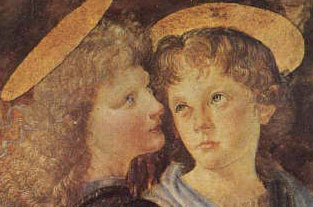
Parola tanto usata e tanto abusata. Molte persone sono intimidite da questa parola e pensano che per vedere un quadro e dire se piace o meno si debba essere degli specialisti.
La cosa importante è sviluppare la propria sensibilità per sentire se un’opera d’arte ci comunica qualcosa. Per ognuno le sensazioni possono essere diverse.
A te piace l’arte?
Conosci la storia dell’arte?
Preferisci l’arte tradizionale o l’arte moderna? Perché?

“Art”.
Much used and much abused word. Many people are intimidated by this word and think that in order to look at a picture and say whether you like it or not, you have to be a specialist.
Do you like art?
Are you familiar with the history of art?
Do you prefer traditional art or modern art? Why?

To practice Italian, in this activity we invite you to read and test…
PRACTICE HERE: Italian/English Version

Para practicar el idioma italiano, en esta actividad te invitamos a leer y testar…
PRACTICA AQUÍ: Versión Italiano/Española

Mai cantato in un coro? Fallo ora! (Have you ever sung in a choir? Do it now!)

La tecnica di canto “a cappella” (senza il supporto di alcuno strumento musicale) si è particolarmente diffusa nel medioevo con i cori religiosi.
Tu hai mai cantato in un coro? Fallo ora con la nostra attività!

The technique of singing “a cappella” (without the support of any musical instrument) has been widespread in the Middle Ages with religious choirs.
Have you ever sung in a choir? Do it now with our activity!

To practice Italian, in this activity we invite you to read, listen and sing…
PRACTICE HERE: Italian/English Version

Para practicar el idioma italiano, en esta actividad te invitamos a leer, escuchar y cantar…
PRACTICA AQUÍ: Versión Italiano/Española

ABC dello stile italiano (ABC of Italian style)

Esistono molti stereotipi sull’Italia e gli italiani (così come su altre culture).
A volte sono sbagliati ma a volte riportano un fondo di verità.
Un proverbio medievale latino dice “vox populi, vox Dei” (la voce del popolo è la voce di Dio).
Giocando con gli stereotipi, puoi creare un ABC del tuo paese?

There are many stereotypes about Italy and Italians (as well as about other cultures).
Sometimes they are wrong but sometimes they bring some truth.
A medieval Latin proverb says “vox populi, vox Dei” (the voice of the people is the voice of God).
Playing with stereotypes, can you create an ABC of your own country?

To practice Italian, in this activity we invite you to read…
PRACTICE HERE: Italian/English Version

Para practicar el idioma italiano, en esta actividad te invitamos a leer…
PRACTICA AQUÍ: Versión Italiano/Española

Napoli (Naples)

Napoli
Il golfo di Napoli e il vulcano Vesuvio sullo sfondo
(image courtesy of Anton Mislawsky)

Napoli, contradditoria e meravigliosa, magica e superstiziosa. Fra l’ottocento e il novecento era considerata una delle più grandi capitali della cultura in Europa. Le opere d’arte in città sono innumerevoli e il tesoro di San Gennaro è più grande di quello della regina d’Inghilterra.
La creatività dei napoletani è famosa nel mondo ma soprattutto il loro cuore.
Conosci Napoli?

Naples, contradictory and wonderful, magical and superstitious. Between the nineteenth and twentieth centuries it was considered one of the greatest capitals of culture in Europe. The works of art in the city are innumerable and the treasure of Saint Gennaro is greater than that of the Queen of England.
The creativity of the Neapolitans is famous in the world but above all their heart.
Do you know Naples?

To practice Italian this week we invite you to research…
PRACTICE HERE: Italian/English Version

Para practicar el idioma italiano esta semana te invitamos a buscar…
PRACTICA AQUÍ: Versión Italiano/Española

Vivaldi, il terremoto della musica italiana (Vivaldi, the earthquake of Italian music)

Venezia (picture courtesy of Karsten Wurth)

Una leggenda racconta che il 4 marzo 1678, a Venezia, ci fu un terribile terremoto e temporale a causa della nascita del grande musicista Antonio Vivaldi.
Non è la verità ma certamente Vivaldi ha portato un terremoto nella musica italiana.
Conosci Vivaldi?

A legend narrates that on March 4, 1678, in Venice, there was a terrible earthquake and storm due to the birth of the great musician Antonio Vivaldi.
This is not the truth but certainly Vivaldi brought an earthquake into Italian music.
Do you know Vivaldi?

To practice Italian this week we invite you to read and listen…
PRACTICE HERE: Italian/English Version

Para practicar el idioma italiano esta semana te invitamos a leer y escuchar…
PRACTICA AQUÍ: Versión Italiano/Española

Il tuo spazio ideale per lo studio delle lingue (Your ideal learning space for language study – by Karoline Gore)

Un proverbio dice: “se ognuno spazzasse davanti a casa sua, tutto il paese sarebbe pulito”. Certamente i vecchi saggi sapevano che l’ordine e la pulizia aiutano a creare un ambiente confortevole. La scienza moderna sta dimostrando che questo può anche favorire la concentrazione e l’apprendimento.
Sei d’accordo?
In che luogo studi l’italiano?
Il tuo spazio è confortevole?

A proverb says: “if everyone swept in front of his house, the whole village would be clean”. Certainly, the old sages knew that order and cleanliness help create a comfortable environment. Modern science is proving that this can also promote concentration and learning.
Do you agree?
Where do you study Italian?
Is your space comfortable?

To practice Italian this week we invite you to read…
PRACTICE HERE: Italian/English Version

Para practicar el idioma italiano esta semana te invitamos a leer…
PRACTICA AQUÍ: Versión Italiano/Española

Image courtesy of Farrel Nobel

Che c’è? (What’s going on?)

L’espressione “che c’è?” è spesso usata se notiamo che qualcuno è triste o preoccupato e vogliamo sapere cosa succede, se qualcosa non va.
Sei triste tu?
Che c’è?

The expression “che c’è?” (literally: “what’s there”, what’s going on?) is often used when we see someone who is sad or worried and we want to know what’s happening, if something is wrong.
Are you sad?
What’s going on?

To practice Italian this week we invite you to read and test…
PRACTICE HERE: Italian/English Version

Para practicar el idioma italiano esta semana te invitamos a leer y testar…
PRACTICA AQUÍ: Versión Italiano/Española

Picture source 123rf.com