
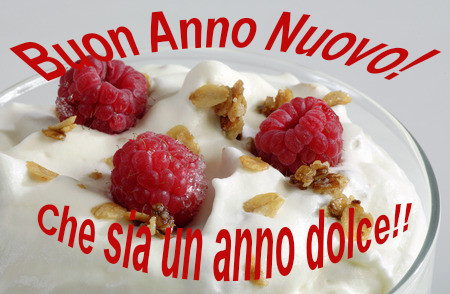
Il dolce di Capodanno! (New Year’s Eve Dessert)

Picture source 123rf.com
Il grande medico Ippocrate diceva: “è preferibile un cibo un pò nocivo ma gradevole, a un cibo totalmente sano ma sgradevole.”
Sei d’accordo?
Per Capodanno, affinché il tuo nuovo anno sia dolce, prepara questo delizioso dessert: è molto buono e non fa male!

The great doctor Hippocrates used to say: “a good food that’s a bit harmful is preferable to a totally healthy but unpleasant food.”
Do you agree?
For New Year’s Eve, in order to have a sweet new year, prepare this delicious dessert: it’s very good and it is not bad for your health!

To practice Italian this week we invite you to read and cook… PRACTICE HERE: Italian/English Version

Para practicar el idioma italiano esta semana te invitamos a leer y cocinar… PRACTICA AQUÍ: Versión Italiano/Española

Buone Feste! (Happy Holidays!)

Image source 123rf.comA CyberItalian amiamo combinare tradizione e innovazione.
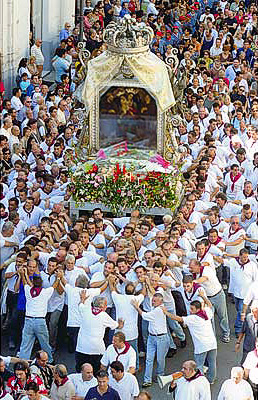
In qualsiasi modo tu festeggi, ti auguriamo delle splendide giornate con la tua famiglia e gli amici.
Buone Feste!

At CyberItalian we love combining tradition and innovation.
In any way you celebrate, we wish you wonderful days with your family and friends.
Happy Holidays!

Festività italiane – esercizio di ascolto (Italian festivities – listening exercise)

Image source https://commons.wikimedia.org/wiki/File:Reggio_calabria_processione_festa_madonna_2.jpgAgli italiani piace fare festa e vacanza ogni volta che è possibile. Oltre alle feste nazionali, ogni città festeggia il santo patrono (ad esempio a Roma si festeggiano San Pietro e Paolo il 29 giugno e in questo giorno a Roma, non nel resto dell’Italia, è vacanza).
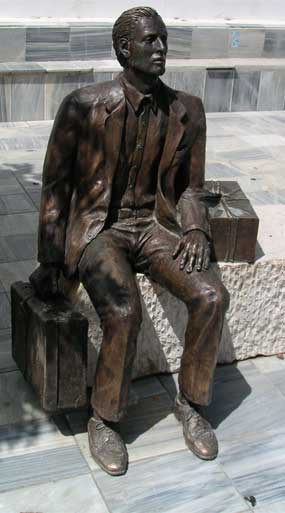

Ogni volta che è possibile “si fa il ponte” cioé se la festività è durante la settimana si aggiungono uno o due giorni di vacanza fino al fine settimana.
Ti piace fare tante feste e vacanze?

Italians like to have holidays and vacations whenever possible. In addition to national festivities, every town celebrates its patron saint (for example Rome celebrates St. Peter and St. Paul on June 29 and this day in Rome, not in the rest of Italy, is an official holiday).
Whenever possible Italians “make the bridge” that is if the holiday is during the week, they add one or two days of holiday until the weekend.
Do you like to have many holidays and vacations?

To practice Italian this week we invite you to listen and test…
PRACTICE HERE: Italian/English Version

Para practicar el idioma italiano esta semana te invitamos a escuchar y testar…
PRACTICA AQUÍ: Versión Italiano/Española

Picture source: wikipedia.org

L’uomo che vive due volte (the man who lives twice)

“L’uomo che vive due volte” è un romanzo fanta-storico: la storia di un uomo che nasce nel 1870 (l’anno dell’unificazione finale dell’Italia con l’acquisizione di Roma) e delle sue avventure attraverso la storia italiana del XX secolo.
Nel romanzo, il protagonista ha un metabolismo rallentato e può godere di una lunghissima giovinezza.
Che ne dici? Ti piacerebbe vivere una vita lunga il doppio?
Vorresti vivere due vite?

“L’uomo che vive due volte” (the man who lives twice) is a “history-fiction” novel: the story of a man born in 1870 (the year of the final unification of Italy with the acquisition of Rome) and his adventures through the Italian history of the 20th century.
In the novel, the main character has a slow metabolism, so he enjoys a very long youth.
How about that? Would you like to live a double-length life?
Would you like to live two lives?

To practice Italian this week we invite you to test…
PRACTICE HERE: Italian/English Version

Para practicar el idioma italiano esta semana te invitamos a testar…
PRACTICA AQUÍ: Versión Italiano/Española

Non dormire! (Don’t fall asleep!)

Picture source 123rf.comLa ninnananna è la canzone che cantiamo ai bambini per farli addormentare.
Ascolta la seguente ninnananna e canta (non addormentarti!)
Hai problemi ad addormentarti la notte?

“La ninnananna” is the song we sing to children to make them fall asleep.
Listen to the following lullaby and sing (don’t fall asleep!)
Do you have trouble falling asleep at night?

To practice Italian this week we invite you to sing and test…
PRACTICE HERE: Italian/English Version

Para practicar el idioma italiano esta semana te invitamos a cantar y testar…
PRACTICA AQUÍ: Versión Italiano/Española

Arte italiana moderna o tradizionale? (Modern or traditional Italian art?)

Sogno N° 67 Milena BarberisL’Italia è famosa per la sua arte, ma molto spesso ci si aspetta dall’Italia un’arte tradizionale, classica, rinascimentale.

Molti artisti italiani (dal ‘900 in poi, ad iniziare con il Futurismo per continuare poi con l’Arte Povera e l’Arte Concettuale) ora preferiscono esprimersi con tecnologie moderne ed uscire dai canoni dell’arte italiana tradizionale.
Cosa pensi tu? Preferisci l’arte moderna o l’arte tradizionale?

Italy is famous for its art, but very often you would expect from Italy only traditional, classical and renaissance art.
Many Italian artists (from the twentieth century on, beginning with Futurism and then continuing with Arte Povera and Conceptual Art) now prefer to express themselves with modern technologies and to abandon the traditional Italian art canons.
What do you think? Do you prefer modern or traditional art?

To practice Italian this week we invite you to watch…
PRACTICE HERE: Italian/English Version

Para practicar el idioma italiano esta semana te invitamos a mirar…
PRACTICA AQUÍ: Versión Italiano/Española

Copyright photo: Milena Barberis

Una ricetta tradizionale: il Mangiarbianco (A traditional recipe: Mangiarbianco)

Source 123rf.com by Krivinis
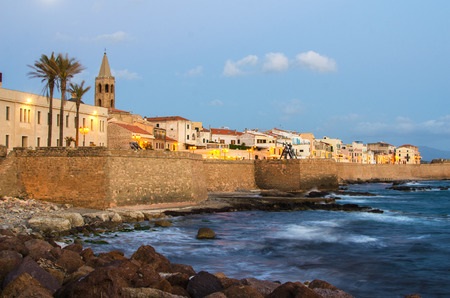
In Italia si trovano dei posti magici, che si sono fermati nel tempo.
Alghero è uno di questi, una cittadina antica che mantiene lingua e tradizioni catalane.
Vuoi fare un salto ad Alghero adesso?

In Italy there are some magic places that are frozen in time.
Alghero is one of those, an ancient town that maintains Catalan language and traditions.
Do you want to take a short trip to Alghero now?

To practice Italian this week we invite you to read and cook…
PRACTICE HERE: Italian/English Version

Para practicar el idioma italiano esta semana te invitamos a leer y cocinar…
PRACTICA AQUÍ: Versión Italiano/Española

Conversazione (Conversation)

Gli italiani sono spesso spinti all’azione dalle emozioni e dalle relazioni. Questo spiega come mai, nonostante la crisi economica, in Italia ci siano più telefoni cellulari che italiani (circa 159 cellulari ogni 100 italiani – fonte Indexmundi).

Nonostante in Italia le tariffe della telefonia mobile siano fra le più alte in Europa, gli italiani amano chiamare spesso gli amici e i familiari.
E tu? Telefoni spesso ai tuoi amici e parenti?

Italians are often driven to action by emotions and relationships. This explain why, in spite of the economic crisis, in Italy there are more mobile phones than people (about 159 mobile phones per 100 Italians – source Indexmundi).
Even though the Italian rates for the use of mobile phones are among the highest in Europe, Italians love to call their friends and relatives often.
And you? Do you call your friends and relatives often?

To practice Italian this week we invite you to read, watch and sing… PRACTICE HERE: Italian/English Version

Para practicar el idioma italiano esta semana te invitamos a leer, mirar y cantar…
PRACTICA AQUÍ: Versión Italiano/Española

Learning a second language

My friend Patty Azzarello, (executive, best-selling author, speaker and CEO/Business Advisor), just wrote a wonderful article on her experience learning Italian.

The proverb says “it takes a village to raise a child”.

I always say “it takes a village to heal, it takes a village to build a project, it takes a village to live…” And it also takes a village to learn a language. Thanks Patty!

http://www.azzarellogroup.com/web/2017/06/05/learning-a-second-language-part-2/

L’uovo di Colombo e i plurali irregolari (The egg of Columbus and irregular plurals)

Pasqua in Italia è una festa nazionale.
Buona Pasqua!
Pasqua è anche il momento delle uova. Conosci l’espressione “questo è l’uovo di Colombo”? Si riferisce ad un’idea brillante o ad una scoperta che una volta trovata sembra semplice ed ovvia.
Si racconta che “Colombo era a cena con alcuni nobili spagnoli quando…”

Easter in Italy is a national holiday.
Buona Pasqua! (Happy Easter!)
Easter time in Italy is also the time of eggs. Do you know the expression “questo è l’uovo di Colombo” (this is the egg of Columbus)? It refers to a brilliant idea or discovery that seems simple or obvious after the fact.
It is reported that “Columbus was dining with many Spanish nobles when…”

To practice Italian this week we invite you to read, listen and play…
PRACTICE HERE: Italian/English Version

Para practicar el idioma italiano esta semana te invitamos a leer, escuchar y jugar…
PRACTICA AQUÍ: Versión Italiano/Española